


There are moments at a film festival that stay with you long after the lights go down. Meeting Carol Connors became one of those moments for me.
Sometimes it is a film that remains in your memory. At other times, it may be a performance or an unexpected conversation. Then there are encounters with people whose lives carry a history far beyond the room around them.
Connors came to the World Music and Independent Film Festival in 2011. By then, she had already experienced several remarkable chapters in American entertainment.
She returned in 2012. That second visit gave me a particularly meaningful memory. Carol performed while my son, Michael Daguiso, accompanied her on piano.
Looking back, those festival appearances feel like small windows into a career that began more than six decades earlier.
Carol Connors and the Early Days of Rock and Roll
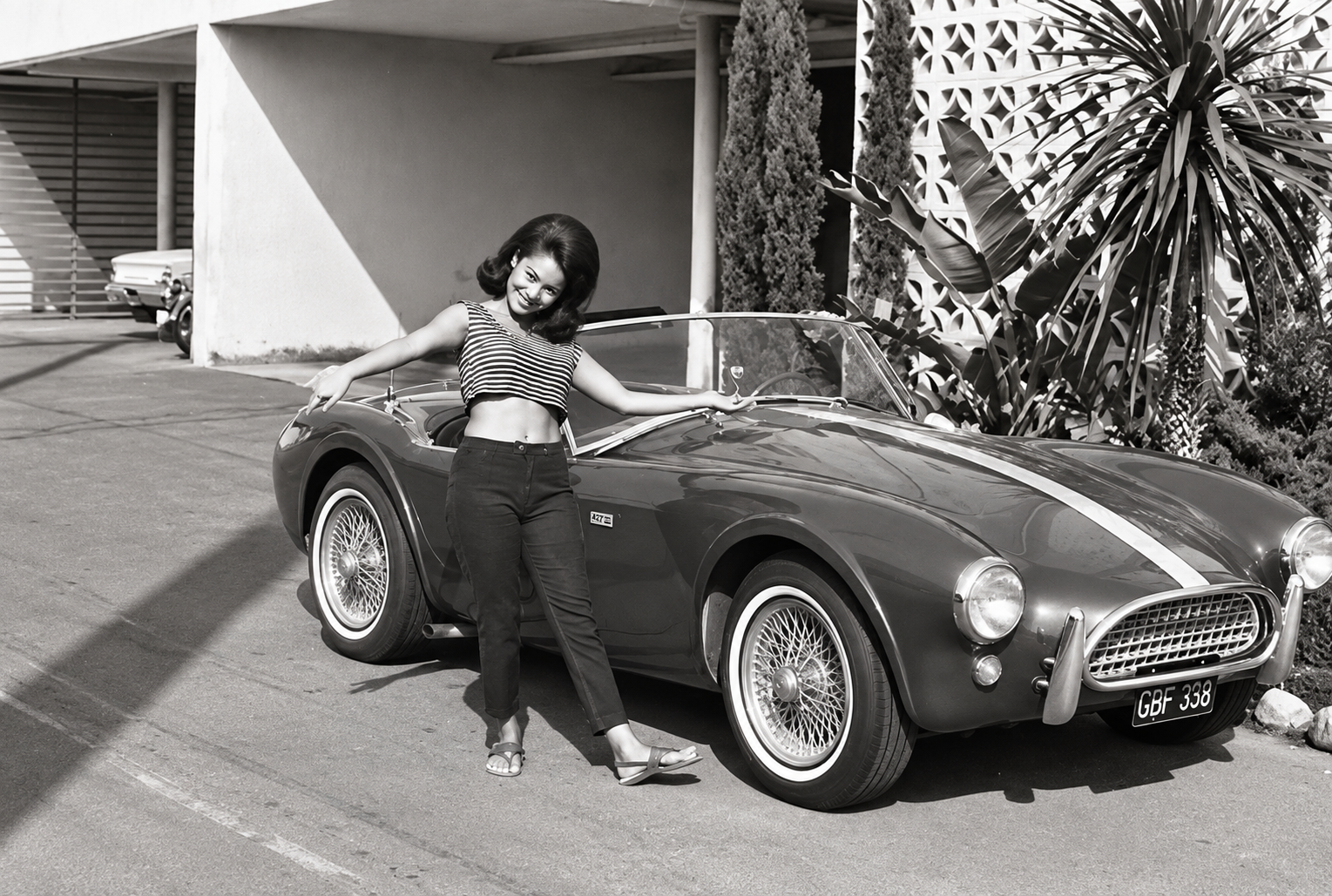
Carol Connors was born Annette Kleinbard and began singing while still young. In the late 1950s, she became the lead vocalist of the Teddy Bears.
The group was formed around a young Phil Spector. Their recording of “To Know Him Is to Love Him” became a No. 1 hit on the Billboard Hot 100 in 1958.
Spector wrote and produced the song. Connors was still a teenager when the record became a national success.
That detail can easily disappear beneath the mythology surrounding early rock and roll. Spector had not yet become the famous record producer later known around the world.
At the time, he was a young musician putting together a vocal group. Connors was the singer whose voice helped carry one of his earliest songs to a national audience.
The success of the record changed the direction of her life.
It also brought her into the orbit of another young performer. His name was quickly becoming inseparable from American popular culture: Elvis Presley.
Connors has spoken publicly about her relationship with Presley. She has described him as her first boyfriend.
According to her own account, their relationship lasted approximately nine months. She later revisited that period in her memoir, Elvis, “Rocky” and Me.
It would be easy to reduce that chapter to a headline: Carol Connors dated Elvis Presley.
Doing so, however, would overlook the career she built for herself.
Connors was already an artist when their paths crossed. Her professional life continued to evolve long after the relationship ended.
Carol Connors: From Singer to Hollywood Songwriter

Her transition from singer to songwriter opened another significant chapter.
Among her most enduring accomplishments is the theme from the original Rocky. The song was “Gonna Fly Now.”
It is sometimes confused with “Eye of the Tiger.” The two songs, however, belong to different chapters of the Rocky franchise.
“Eye of the Tiger” appeared in Rocky III. Frankie Sullivan and Jim Peterik wrote the song.
Connors’s contribution goes back to the original 1976 film. She co-wrote “Gonna Fly Now” with composer Bill Conti and lyricist Ayn Robbins.
The song became one of the most recognizable themes in American cinema. It also received an Academy Award nomination for Best Original Song.
Over time, “Gonna Fly Now” became far more than a movie theme.
Its music became associated with determination, training and perseverance.
The image of Rocky running through Philadelphia became inseparable from the music. His climb up the steps became one of the film’s defining images.
Generations of viewers may never have known the names of the songwriters. Yet they understood the emotion the music created.

For Connors, the song represented another remarkable transformation.
The teenage vocalist behind a No. 1 record had become a Hollywood songwriter. Her work was now part of an enduring piece of American film music.
Her songwriting career extended well beyond Rocky. She wrote for film, television and recording artists.
Along the way, her work brought further recognition and award nominations.
Yet achievements and statistics tell only part of Carol Connors’s story. The people and experiences surrounding her career reveal another side.
A Festival Memory Across Generations
That is what I remember most clearly about her visits to the World Music and Independent Film Festival.
In 2011, Connors came to the festival in connection with the independent film True Bromance. She appeared as part of the film’s cast.
She arrived carrying a lifetime of experiences. Many people in the room may not have fully appreciated that history at first glance.
The following year brought her back to the festival.
This time, what remains strongest in my memory is the music.
My son Michael sat at the piano while Carol performed.
Certain experiences do not need elaborate staging to become memorable. Sometimes a singer, a pianist and a shared piece of music are enough.
Watching my son accompany her was one of those moments for me. Her career reached back to the earliest days of rock and roll.
The performance connected generations in a way that a biography never could.
The young singer who once stood behind a microphone with the Teddy Bears was now sharing music with my son.
That kind of continuity makes a festival more than a collection of screenings and awards.
It becomes a place where people from different generations meet. Different chapters of the arts can suddenly share the same space.
Music Beyond the Festival

Carol’s connection with performance continued in other settings as well.
During the period surrounding her second festival appearance, I was invited to the Kennedy Center.
There, I saw Carol perform “Eye of the Tiger” in connection with a Wounded Warrior event.
The distinction is important. Carol did not write “Eye of the Tiger.”
Watching her perform it, however, brought the Rocky legacy full circle in an unexpected way.
The song had originally been written for a fictional fighter. In that setting, it carried a different resonance.
The event was connected with wounded service members. Its message of perseverance therefore took on a more immediate human meaning.
That is one of the extraordinary things about music.
A song may be created for one purpose. Once it reaches the public, listeners begin giving it new meanings and new lives.
Songs can travel across decades, generations and circumstances.
Along the way, music can also bring together people who otherwise might never have shared the same room.
The Creative Worlds of Carol Connors

That, perhaps, is the thread running through Carol Connors’s life.
Throughout her career, she has moved between different creative worlds. She has been a singer, songwriter, recording artist and Hollywood collaborator.
Her story stretches from early rock and roll to motion-picture music.
It also reaches from the world of Elvis Presley to the world of Rocky.
There is another arc that stays with me. It begins with a young woman behind a microphone in the 1950s.
Years later, I watched that same performer at the Kennedy Center.
Alongside those milestones is another personal memory. Carol performed at our festival while my son sat at the piano.
It is easy to look at a career like hers and see only the famous names. Elvis Presley, Phil Spector, Rocky and Hollywood are all part of the story.
So are the nominations and awards.
Fame, however, is only the outline of a life.
The more interesting story can often be found between those landmarks.
Connors kept working, writing and performing as the decades changed around her. Just as importantly, she continued showing up.
That last part matters to me.
Recognition and Another Chapter
Her first World Music and Independent Film Festival appearance came in 2011. She returned the following year.
During her association with the festival, Connors received an Outstanding Achievement Award.
The recognition honored a career that had already traveled across extraordinary distances.
Yet the award did not feel like the conclusion of her story. Instead, it became another moment along a much longer road.
Connors later revisited the people and experiences that shaped her journey. She shared them in Elvis, “Rocky” and Me: The Carol Connors Story.
Her story has also continued into documentary filmmaking. Those memories can now reach new audiences in another form.
There is something fitting about that progression.
Her career began with a record that became part of music history. Decades later, she continues telling her story in her own voice.
More Than the Famous Names
Perhaps that is the most important thing to remember about Carol Connors.

Her identity cannot be reduced to the woman who dated Elvis.
She is also more than the voice of “To Know Him Is to Love Him.”
Nor can she be defined only as one of the writers behind “Gonna Fly Now.”
Actress, songwriter, performer and award recipient are all parts of her story. No single title, however, can fully define it.
Carol Connors is the sum of all those chapters.
For those of us who welcomed her into our festival, there is another chapter that belongs to our own history.
She first walked through our doors in 2011. The following year, she returned.
During that second visit, Michael Daguiso sat at the piano while Carol performed.
History was no longer something we were simply reading about.
We were watching it unfold in front of us.
That is what I remember most. Beyond the famous songs, celebrated names and awards, Carol Connors was there.
For one evening, the past, present and future of music shared the same stage.
Explore more stories about artists, creators and remarkable personalities at Global People Magazine.


